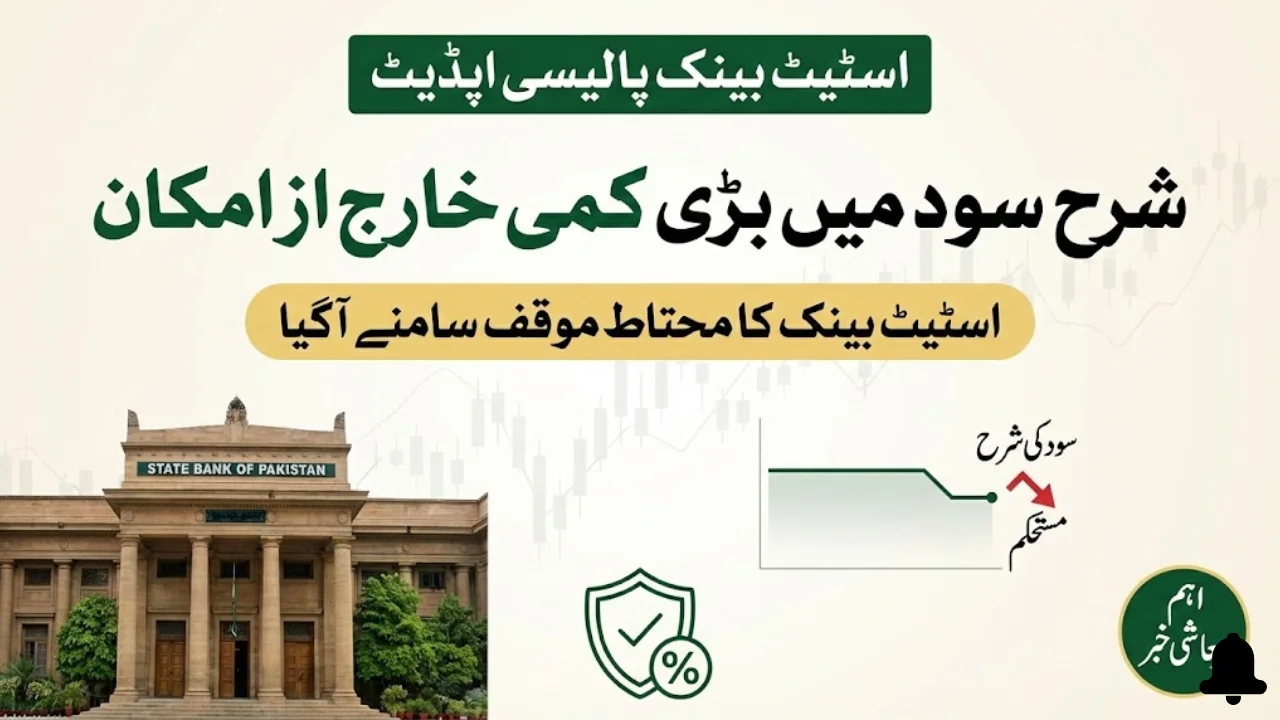
The State Bank of Pakistan has ruled out any aggressive or unconventional cuts in the policy rate, reinforcing its commitment to economic stability over quick stimulus. The message came directly from SBP Governor Jameel Ahmad, who indicated that Pakistan’s macroeconomic direction is expected to remain steady for at least the next two years.
The statement comes amid public calls for faster monetary easing, but the central bank appears determined to protect recent economic gains.
SBP’s View on Pakistan’s Economic Stability
According to the SBP governor, Pakistan has moved beyond the most difficult phase of its recent economic crisis. He noted that the country is now operating in a more predictable environment, supported by:
-
Controlled inflation
-
Improved foreign exchange reserves
-
Better external account management
He emphasized that this momentum is likely to continue, provided policy discipline is maintained.
Why SBP Is Avoiding Aggressive Rate Cuts
Despite calls for bold interest rate reductions, SBP officials believe that rapid easing could reverse hard-earned stability.
Key reasons behind the cautious stance include:
-
Risk of reigniting inflation
-
Pressure on the exchange rate
-
Potential instability in external accounts
The governor made it clear that monetary decisions will remain strictly data-driven, not politically influenced.
Next Phase: From Stability to Sustainable Growth
The SBP has completed two major phases:
-
Crisis containment
-
Restoration of macroeconomic stability
The next focus is supporting sustainable economic growth, mainly through development finance and productivity-enhancing initiatives. While development finance is not a traditional central bank role, SBP aims to facilitate sectors that strengthen long-term resilience.
Inflation, Growth & External Sector Outlook
SBP expects inflation to remain within a 5%–7% range, helping businesses and investors plan better.
Other key indicators highlighted:
-
GDP growth average remains around 3.7% historically
-
Current account deficit has turned into a surplus in 2025
-
Foreign exchange reserves have improved alongside controlled import growth
Monthly imports have increased moderately, reflecting recovery without excessive balance-of-payments stress.
Exports, Incentives & Structural Support
Export performance remains mixed:
-
Non-food exports growing at 5–6%
-
Rice exports declined sharply in FY2026
To support exporters, the government has introduced:
-
Reduced electricity tariffs
-
Adjustments in export finance rates
-
Special facilitation measures for leading exporters
SBP believes these fiscal and structural reforms will complement its stabilisation efforts over time.
IMF Program & Future Dependence
Pakistan is currently operating under a $7 billion IMF Extended Fund Facility, scheduled to conclude in late 2027. According to the governor, future reliance on the International Monetary Fund will depend on:
-
Fiscal discipline
-
Responsible resource utilization
-
Staying within economic limits
He stressed that post-IMF behavior will define Pakistan’s long-term independence from bailout programs.
Frequently Asked Questions People Are Searching
Is SBP planning a major interest rate cut soon?
No, SBP has ruled out bold or unconventional rate cuts.
What is SBP’s priority right now?
Maintaining economic stability through cautious, data-driven policy.
How long does SBP expect stability to continue?
At least the next two years, if discipline is maintained.
Will lower rates automatically save government money?
Not entirely, as SBP’s own income also declines with lower rates.
Is inflation under control in Pakistan?
SBP expects inflation to remain within a manageable 5%–7% range.
Conclusion
The State Bank of Pakistan’s latest stance sends a clear signal: stability comes before speed. By resisting pressure for aggressive rate cuts and sticking to evidence-based policy, SBP aims to protect recent economic progress while gradually supporting sustainable growth. For markets and investors, the message is one of caution, continuity, and long-term balance rather than short-term relief.