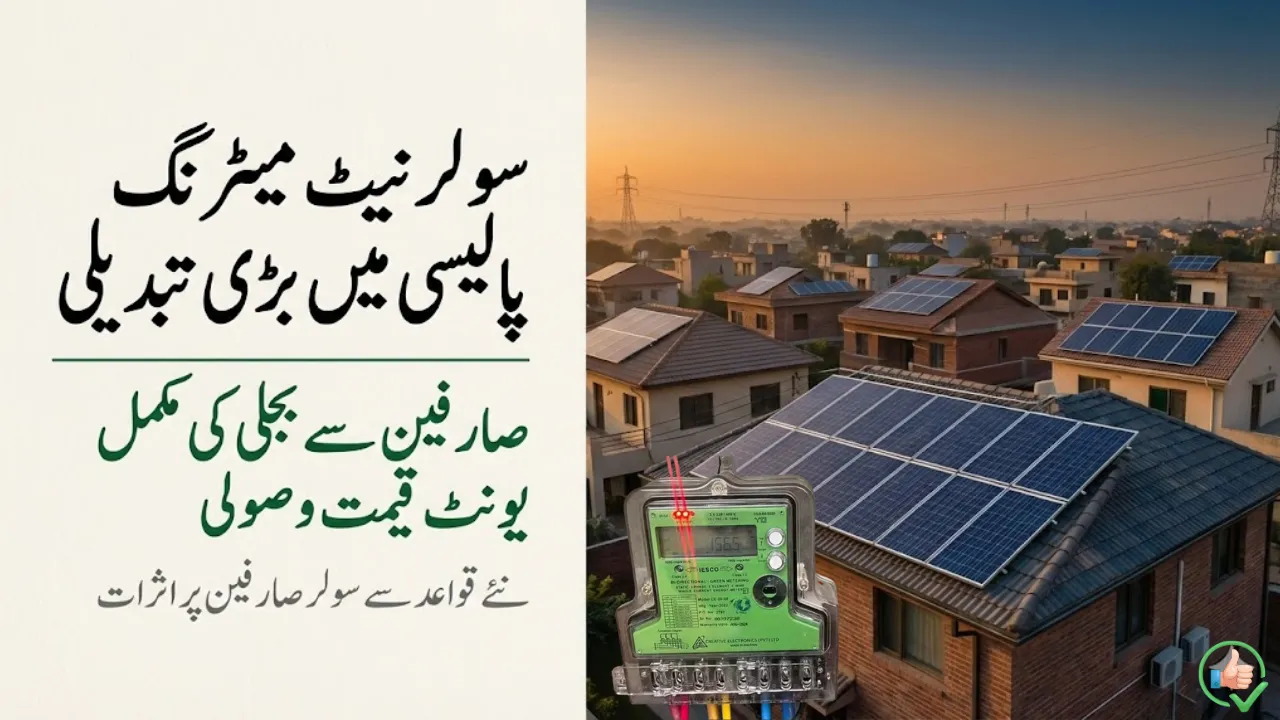
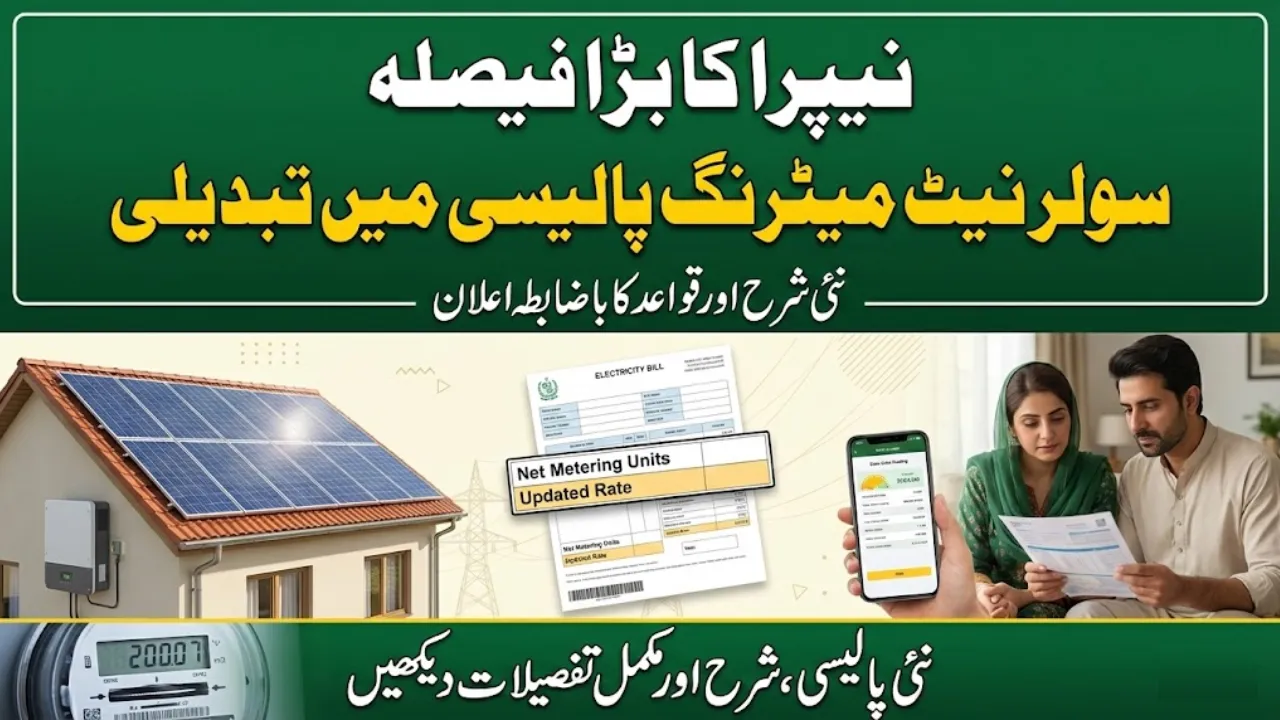
Pakistan’s power sector has taken a major policy turn as Solar Net Metering has effectively been replaced with a net billing system. The new rules significantly change how solar users are charged and paid, directly impacting households, businesses, and industries using rooftop solar systems.
Pakistan has officially changed the Solar Net Metering system, and now solar users will pay the full electricity unit price while selling surplus power at a much lower rate.
The decision has been notified under the Nepra (Prosumer) Regulations, 2026, introducing a new pricing structure aimed at reducing financial pressure on the national grid.
What Changed in Solar Net Metering Policy
Previously, solar users benefited from a one-to-one unit adjustment. Extra units sent to the grid could fully offset electricity consumed later.
Under the new system:
-
Exported solar units are purchased at the national average energy purchase price
-
Imported electricity is charged at the full consumer tariff
-
One-to-one adjustment is no longer available
This marks the formal end of traditional Solar Net Metering in Pakistan.
New Net Billing System Explained Simply
Under net billing:
-
Solar users sell surplus electricity to DISCOs at around Rs11 per unit
-
Electricity taken from the grid is charged at Rs50+ per unit (depending on tariff)
-
Excess payment is adjusted in the next bill or paid quarterly
This change directly affects savings calculations for new solar installations.
Impact on Existing Solar Net Metering Users
Existing prosumers will remain on their current contracts until expiry. However:
-
All renewals will shift to net billing
-
New connections will follow five-year contracts
-
Previous seven-year agreements are discontinued
Long-term returns for future solar users are expected to change significantly.
Technical & Financial Conditions for Solar Users
The new regulations introduce tighter controls:
-
Maximum system size capped at 1 MW
-
Generation limited to sanctioned load
-
New connections blocked if transformer load reaches 80%
-
Load flow study mandatory for systems above 250 kW
All interconnection costs, meters, and upgrades must now be paid by the consumer.
Why the Government Ended Solar Net Metering
Officials cite several reasons:
-
Heavy revenue losses for DISCOs
-
Rising tariffs for non-solar consumers
-
Grid instability during low-demand hours
-
Higher buyback rates for rooftop solar compared to utility-scale projects
According to estimates, continued net metering could have caused Rs545 billion in losses by 2034.
Is Solar Still Worth It After Net Metering Ends?
Yes—but with a new strategy.
Solar remains beneficial for:
-
Offices and factories with daytime usage
-
Shops and commercial buildings
-
Homes focused on self-consumption
Systems designed mainly to export electricity will now see longer payback periods.
FAQs – Solar Net Metering Policy Update
What happened to Solar Net Metering in Pakistan?
Solar Net Metering has been replaced with a net billing system under new Nepra regulations.
Will existing solar users be affected immediately?
No, existing users remain on current contracts until they expire.
How much will solar users get per exported unit now?
Around Rs11 per unit, based on the national average energy purchase price.
Why is electricity still expensive for solar users?
Imported electricity is charged at full consumer tariff, including taxes and surcharges.
Is rooftop solar still a good option in 2026?
Yes, especially for users who consume most of their generated electricity themselves.
Closing Note
The end of Solar Net Metering marks a major shift in Pakistan’s renewable energy journey. While the new net billing policy reduces financial strain on the grid, it also reshapes how consumers plan solar investments. Going forward, smart system sizing and maximum self-use will be the key to making solar power financially rewarding under the new rules.