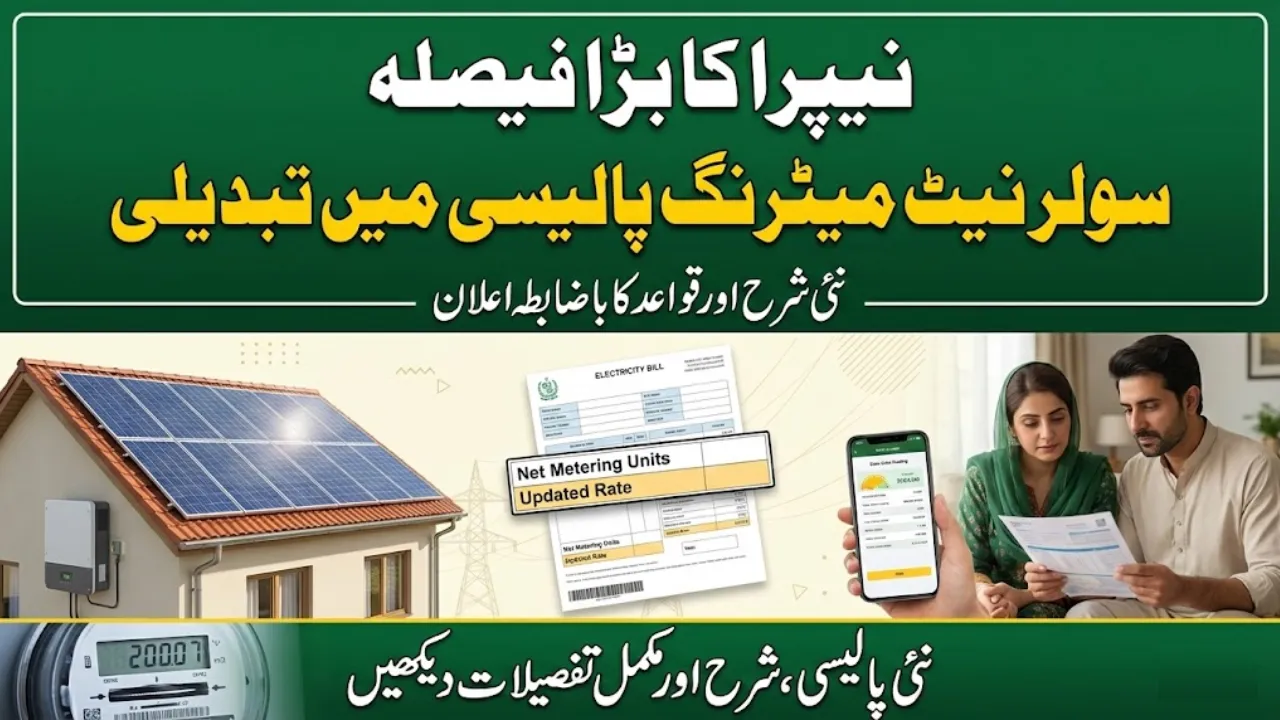
Pakistan’s solar sector received a major update as the National Electric Power Regulatory Authority confirmed that existing net metering consumers will continue under their current agreements. The clarification comes after recent regulatory amendments sparked concern among solar users and investors.
For thousands of households and businesses that installed rooftop solar systems, the biggest question was simple: Will my current net metering contract change? The latest notification provides much-needed certainty.
This article explains the real impact of the new framework, what changes for new consumers, and how it may affect future solar investment decisions in Pakistan.
Why NEPRA’s Decision Matters in 2026
The updated regulations were introduced amid rising electricity costs and rapid growth in rooftop solar installations. The policy shift aims to rebalance how surplus electricity is compensated while protecting earlier investors.
The key takeaway: existing solar users remain protected under previous agreements until their contracts expire.
Protection for Existing Solar Consumers
Consumers who already have approved net metering agreements will continue under the previous rules.
-
Their current billing mechanism remains unchanged.
-
Previously signed contracts will stay valid until expiry.
-
Exported electricity will be settled as per earlier agreed rates.
This decision ensures policy stability and avoids financial disruption for earlier adopters.

What Changes Under the New Solar Framework
While existing users are safe, new connections and renewals will follow revised regulations.
Key Changes:
| Policy Area | Previous System | New Framework (2026) |
|---|---|---|
| Compensation Model | One-to-one unit offset | Net billing mechanism |
| Surplus Purchase Rate | Linked to retail tariff | National average energy purchase price |
| Agreement Duration | 7 years | 5 years (renewable) |
| Excess Credit | Bill offset | Adjustment or quarterly payment |
The biggest shift is the move away from the one-to-one offset model.
End of the One-to-One Offset Model
Previously, solar consumers could offset exported units directly against imported grid units. This helped reduce electricity bills significantly.
Under the new structure, exported electricity will be purchased at a defined average rate rather than fully offsetting consumption.
This change directly affects the financial return calculations for new solar investors.
Reduction in Contract Period
The standard agreement term has been reduced from seven years to five years.
Shorter contracts mean:
-
More frequent renewals
-
Greater regulatory flexibility
-
Adjusted long-term investment projections

Future renewals will also follow the updated billing structure.
How Surplus Electricity Will Be Paid
If a consumer exports more electricity than they import:
-
The excess amount may be adjusted in the next billing cycle, or
-
Paid every three months, depending on billing calculations.
This introduces a clearer settlement process under net billing.
Impact on New Solar Installations
For households planning to install solar in 2026:
-
ROI (Return on Investment) timelines may extend
-
Savings will depend on the national average purchase price
-
Battery storage may become more attractive

The new policy encourages more strategic energy planning.
What About Proposed Gross Metering?
Earlier discussions suggested a gross metering model at a lower fixed rate. However, the finalized amendments focus on net billing rather than a complete gross metering shift.
This provides a middle ground instead of a full policy reversal.
Public Consultation and Stakeholder Feedback
The regulator has opened draft amendments for stakeholder input. This ensures transparency and allows industry experts to provide feedback before final approval.
Public participation may influence final implementation details.
Financial Planning for Solar Investors
If you are considering solar installation:
-
Calculate ROI based on net billing
-
Review agreement duration carefully
-
Consider energy consumption patterns
-
Explore battery integration options

Financial clarity is now more important than ever.
Effect on Pakistan’s Renewable Energy Goals
Despite regulatory adjustments, solar remains a key pillar of Pakistan’s renewable transition. The updated policy aims to balance:
-
Grid stability
-
Consumer protection
-
Sustainable investment growth
Long-term renewable targets remain intact.
Should Existing Users Be Concerned?
No. Current users will continue under their existing contracts without changes until expiry. However, renewals will follow the updated structure.

What Experts Are Watching Next
Energy analysts are monitoring:
-
Future tariff revisions
-
Renewable capacity growth
-
Consumer response to new billing terms
-
Market impact on rooftop solar installations
The next 12 months will be crucial for Pakistan’s distributed energy sector.
FAQs:
Will my current solar net metering agreement change?
No, existing agreements remain valid until their expiry date.
What is the new compensation method for surplus electricity?
New consumers will be paid according to the national average energy purchase price under net billing.
Has gross metering been fully implemented?
No, the updated framework focuses on net billing rather than full gross metering.
Is the contract period really shortened?
Yes, new agreements will be issued for five years instead of seven.
Should I still install solar in 2026?
Solar remains viable, but financial planning must consider the updated billing mechanism.
Conclusions:
Pakistan’s solar policy update brings clarity rather than disruption. Existing consumers remain protected, while new investors must adjust to revised billing terms. With careful planning and updated calculations, rooftop solar continues to be a practical long-term energy solution.
Latest Updates