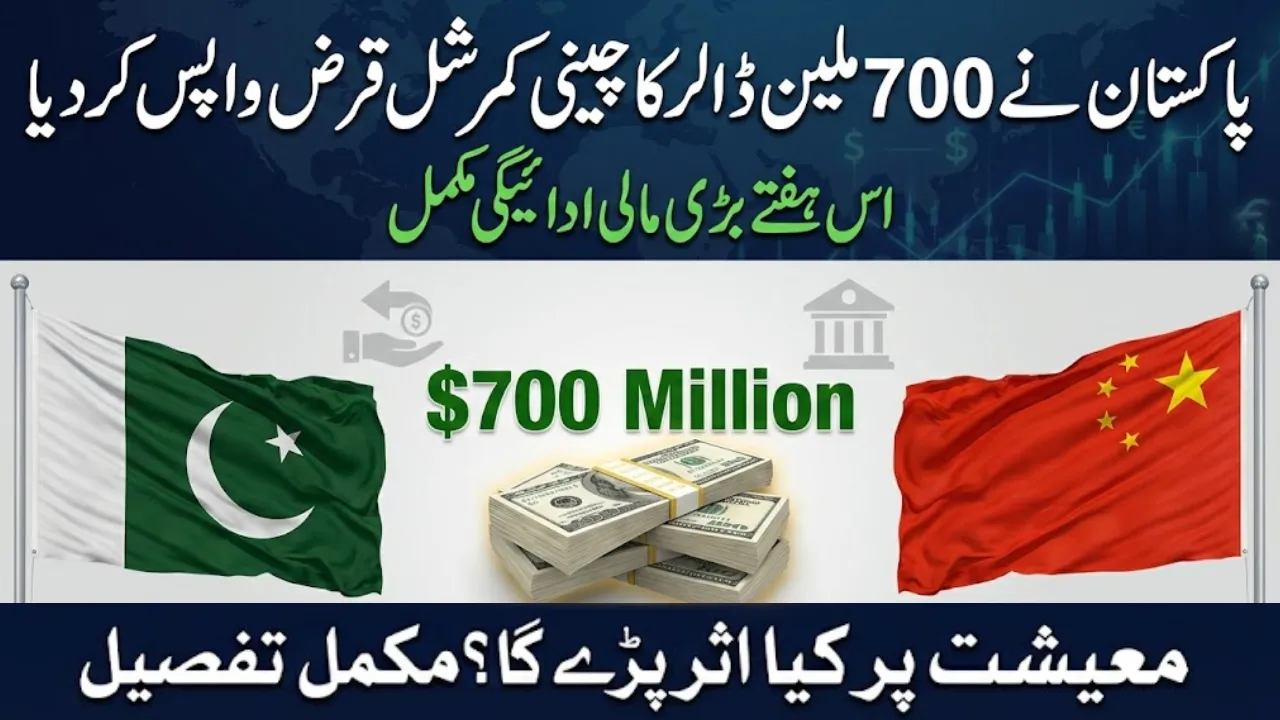
Pakistan has repaid $700 million to a Chinese commercial bank this week, a move that briefly reduced the country’s foreign exchange reserves but signaled Islamabad’s commitment to meeting external debt obligations on time. The development comes at a sensitive moment as economic managers prepare for a key review under the International Monetary Fund (IMF) program.
The repayment reflects Pakistan’s broader strategy to maintain financial discipline while negotiating rollovers and fresh inflows from friendly countries. Although reserves dipped after the payment, officials remain confident that upcoming inflows and refinancing arrangements will help stabilize the external account position.
With global markets closely watching Pakistan’s reform progress, this repayment carries both economic and diplomatic importance.
Loan Repayment Details and Immediate Impact
The $700 million amount was paid to the China Development Bank as part of previously agreed commercial borrowing arrangements. Following the repayment, Pakistan’s gross foreign exchange reserves declined to around $15.5 billion, according to official figures.
While such repayments temporarily reduce reserves, they are routine in sovereign debt management cycles. Governments often plan repayments alongside expected inflows to avoid long-term pressure on the currency.
Foreign Exchange Reserves: Current Position
Foreign exchange reserves are critical for:
-
Supporting the value of the rupee
-
Managing import payments
-
Meeting external debt commitments
-
Boosting investor confidence
A short-term dip does not necessarily indicate financial instability, especially when offset by expected rollovers or new financing.

Upcoming IMF Review and Why It Matters
Pakistan is preparing for the next review under its IMF Extended Fund Facility (EFF). A successful review could unlock a $1 billion tranche, strengthening reserves and market sentiment.
The IMF assessment will likely focus on:
-
Fiscal discipline
-
Tax reforms
-
Energy sector adjustments
-
Debt sustainability
Positive outcomes from the review could reduce external financing risks in the coming months.
External Debt Snapshot (June 2025)
Below is a simplified overview of Pakistan’s recent external debt position:
| Category | Estimated Amount |
|---|---|
| External Public Debt | $91.8 Billion |
| Commercial Loans | $7.2 Billion |
| Chinese Commercial Loans | $6.6 Billion |
| Bilateral Cash Deposits | $12.5 Billion (approx.) |
External public debt rose by around 6% year-on-year, reflecting continued borrowing from multilateral and commercial sources.
China’s Financial Role in Pakistan’s Economy
China remains one of Pakistan’s largest bilateral financial partners. Support includes:

-
Commercial loans
-
Cash deposits
-
Currency swap arrangements
These facilities have helped Pakistan manage balance-of-payments pressures during periods of weak exports and limited foreign direct investment.
Bilateral Deposit Rollovers Under Discussion
Pakistan is also negotiating extensions on deposits from:
-
Saudi Arabia
-
United Arab Emirates
-
China
Short-term rollovers provide breathing space, but longer tenures are preferred to ensure stability and reduce refinancing risk.
Why This Repayment Is Strategically Important
Timely repayment strengthens Pakistan’s credibility in international markets. It signals that despite fiscal constraints, the country honors its commitments — a critical factor for:

-
Securing refinancing
-
Maintaining credit relationships
-
Supporting investor confidence
Impact on the Pakistani Rupee
Debt repayments can temporarily pressure the rupee due to reserve outflows. However, currency stability largely depends on:
-
Remittances
-
Export performance
-
IMF inflows
-
Bilateral financing
Market analysts suggest that upcoming external inflows may ease immediate pressure.
Government’s Financing Strategy Moving Forward
Economic policymakers are focusing on:

-
Reducing reliance on short-term commercial borrowing
-
Expanding export earnings
-
Encouraging foreign direct investment
-
Negotiating favorable rollover terms
Diversifying financing sources remains a key priority.
Economic Outlook After the Repayment
The repayment alone does not define Pakistan’s economic trajectory. Instead, the broader outlook depends on:
-
IMF program continuity
-
Fiscal reforms implementation
-
Global commodity prices
-
Regional economic stability

If reform momentum continues, reserves are expected to stabilize in the coming months.
What Investors and Citizens Should Watch
Key indicators to monitor:
-
IMF review outcome
-
Movement in foreign exchange reserves
-
Exchange rate trends
-
New bilateral financing announcements
These factors will shape Pakistan’s short-term economic stability.
Conclusion:
Pakistan’s repayment of the $700 million Chinese commercial loan highlights disciplined debt management during a crucial economic phase. While reserves have temporarily declined, upcoming IMF support and bilateral negotiations are expected to stabilize the financial position. The coming weeks will be critical in shaping investor confidence and Pakistan’s broader economic outlook.
FAQs:
Why did Pakistan repay the $700 million loan now?
The repayment was scheduled under existing commercial loan agreements and reflects routine sovereign debt servicing.
Will this repayment weaken Pakistan’s economy?
Short-term reserve declines are normal. Economic stability depends more on upcoming inflows and IMF support.
How much are Pakistan’s current foreign exchange reserves?
After the repayment, reserves stood near $15.5 billion.
Is more Chinese debt maturing soon?
Yes, another commercial loan is reportedly maturing later this year, and refinancing discussions are expected.