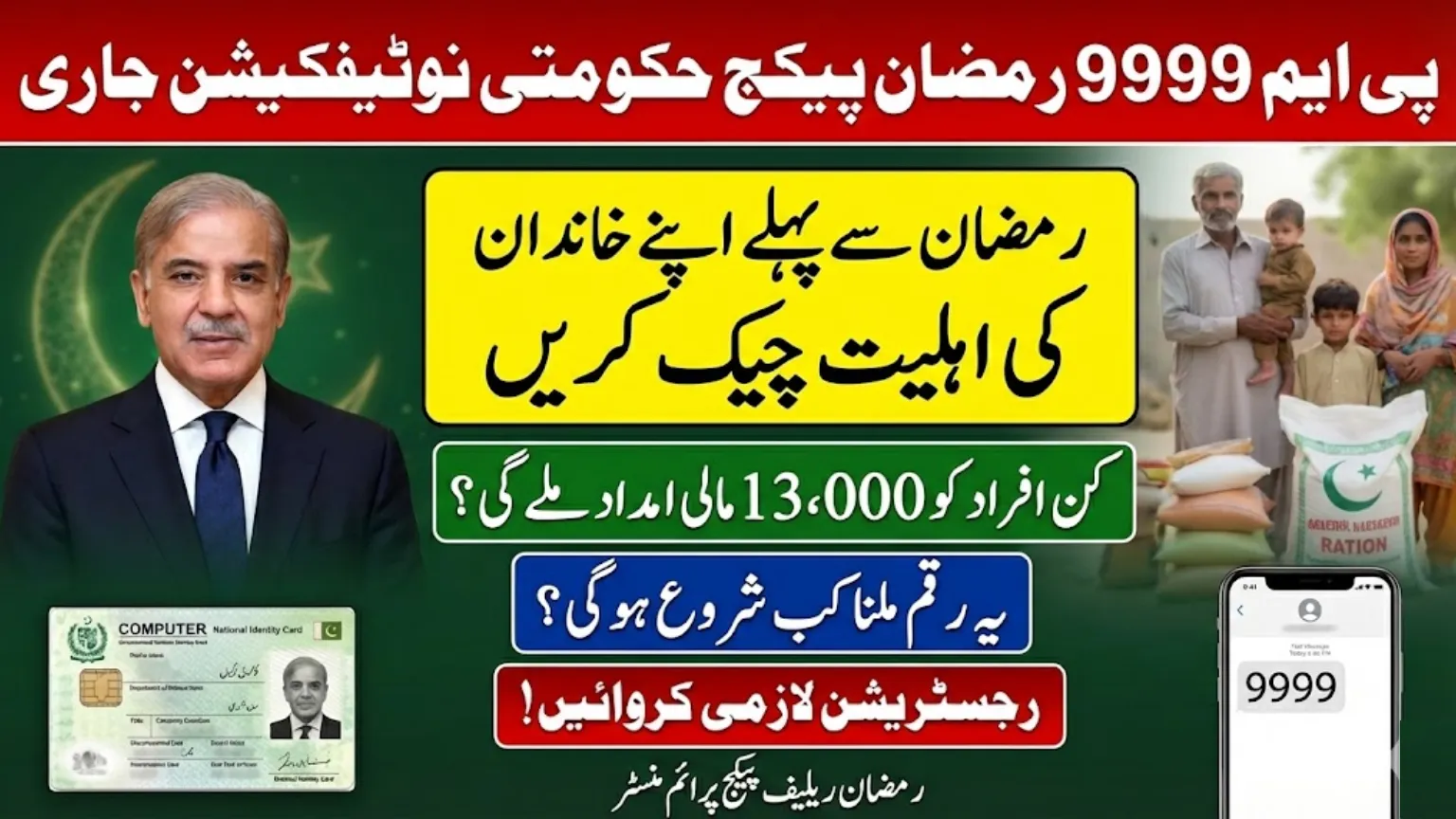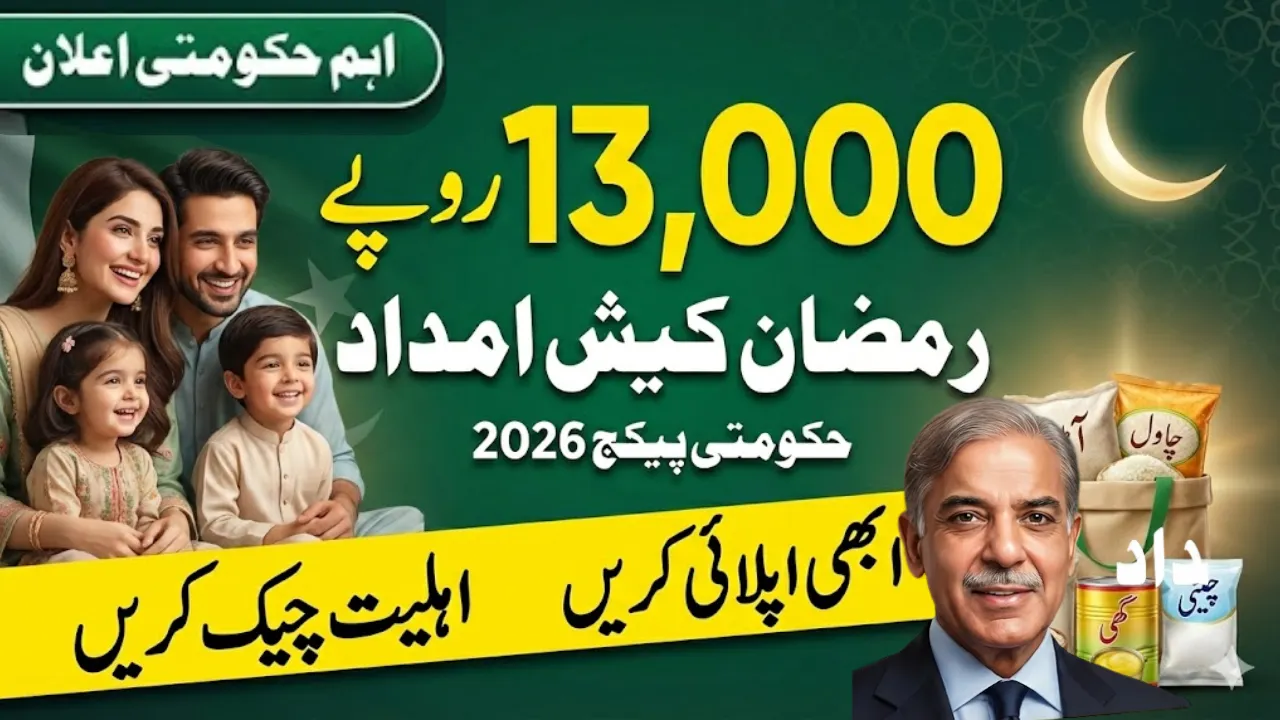
As Ramzan 2026 approaches, the federal government has unveiled a major relief initiative aimed at easing financial pressure on low-income households. Prime Minister Shehbaz Sharif has announced a Rs 38 billion Ramzan Package, under which 1.21 million deserving families will receive Rs 13,000 each through a fully digital payment system.
The move signals a shift toward transparency and dignity in public welfare distribution.
From Utility Stores to Digital Transfers – What Has Changed?
Unlike previous years, the government has discontinued the traditional Utility Store distribution model. Officials admitted that earlier systems often resulted in long queues, supply complaints, and public inconvenience.
For 2026, the cash support will be transferred directly into digital wallets or bank accounts, eliminating middlemen. The State Bank of Pakistan has introduced a regulatory framework to ensure smooth, secure, and transparent transactions.
This transition also supports Pakistan’s broader push toward a cashless and digitized welfare structure.
Who Will Receive the Rs 13,000 Support?
According to official details:
| Key Detail | Information |
|---|---|
| Total Package Size | Rs 38 Billion |
| Families Covered | 1.21 Million |
| Per Family Amount | Rs 13,000 |
| Distribution Method | Digital Wallet / Bank Transfer |
| Special Allocation | Rs 10 Billion for Kafalat beneficiaries |
A portion of the funds — Rs 10 billion — has been reserved for families already registered under the government’s Kafalat program, ensuring that existing beneficiaries are prioritized.
Eligibility is expected to align with poverty score criteria and previously verified databases used in federal welfare schemes.
Why This Package Matters in 2026
With inflationary pressures still affecting food and essential commodity prices, Ramzan expenses can significantly strain household budgets. The government’s decision to provide direct cash instead of subsidized goods gives families flexibility to purchase according to their needs.
Officials have stated that the digital model will be reviewed periodically to address technical or banking coordination issues.
The broader aim is to build a welfare system that is efficient, corruption-resistant, and respectful of beneficiaries’ dignity.
Frequently Asked Questions
Who is eligible for the PM Ramzan Package 2026?
Low-income families identified through government welfare databases, including Kafalat beneficiaries, are expected to qualify.
How will the Rs 13,000 be transferred?
Funds will be sent through digital wallets or direct bank transfers to verified recipients.

Is this package available in all provinces?
Yes, it covers all four provinces, as well as Gilgit-Baltistan and Azad Jammu & Kashmir.
Will people need to visit Utility Stores to collect relief?
No, the 2026 package has replaced physical distribution with a digital payment mechanism.
Conclusion
The PM Ramzan Package 2026 reflects a significant policy shift toward digital welfare delivery in Pakistan. By combining targeted financial support with improved transparency, the government aims to reduce hardship during the holy month while modernizing its relief framework.
If implemented effectively, this initiative could set a long-term precedent for how seasonal assistance programs are delivered — prioritizing efficiency, accountability, and the dignity of every deserving family.