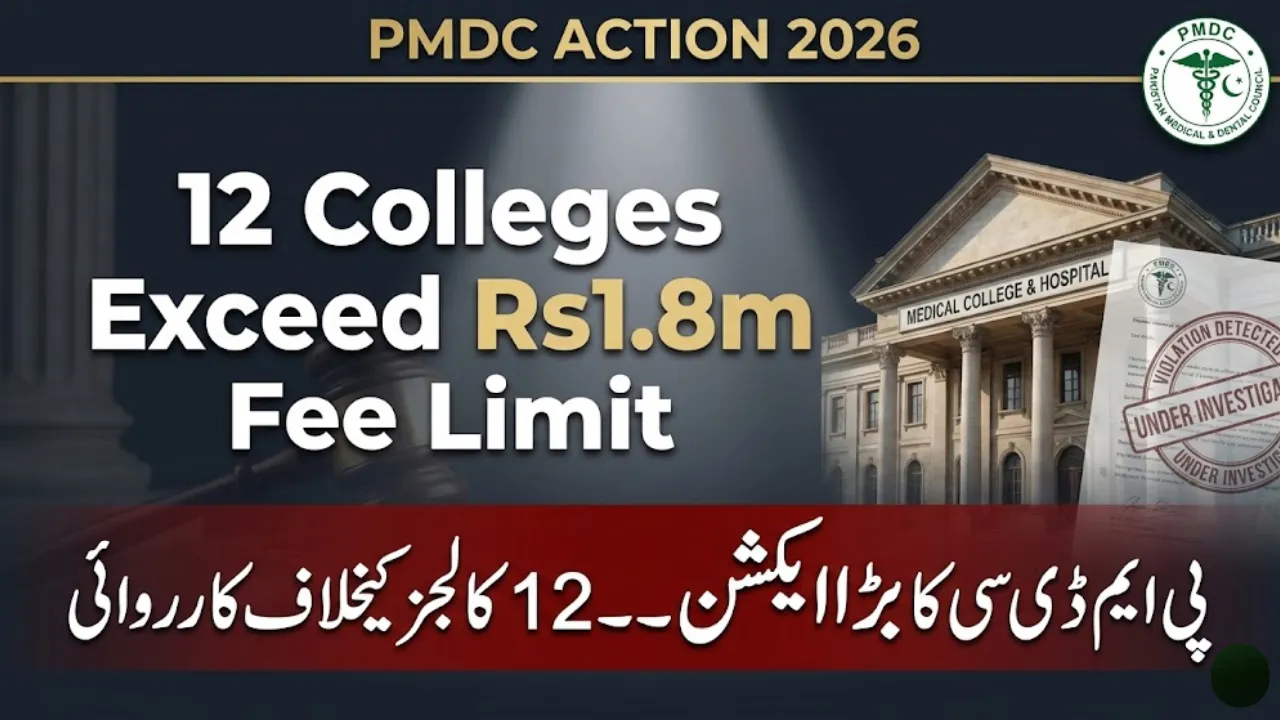
Pakistan’s medical education sector has entered a decisive phase as the Pakistan Medical and Dental Council (PMDC) takes firm action against private institutions allegedly violating the Rs1.8 million annual fee cap.
In a significant development, the regulatory body has issued show-cause notices to 12 medical and dental colleges found charging students beyond the approved ceiling. The move signals a stronger regulatory approach in 2026, particularly amid growing public concern over rising medical education costs.
Why the Rs1.8 Million Cap Matters
The annual tuition cap of Rs1.8 million for MBBS and BDS programmes was introduced last year as part of broader medical education reforms directed by the federal government.
The reform initiative aimed to:
-
Protect middle-class families from escalating tuition fees
-
Standardise private medical education costs nationwide
-
Improve transparency in institutional fee structures
The decision emerged from recommendations of the Committee on Medical Education Reforms, formed under the prime minister’s directive.
In 2026, with inflationary pressures still affecting household incomes, enforcement of this cap has become even more sensitive.
What PMDC President Dr Rizwan Taj Announced
Speaking during a media session in Islamabad, PMDC President Dr Rizwan Taj confirmed that the council is actively reviewing institutions charging above the notified limit.

According to him:
-
12 institutions have received show-cause notices
-
Around 40 additional cases are under evaluation
-
Some petitions challenging the cap were dismissed in court and referred back to PMDC
Dr Taj emphasised that the council is closely monitoring compliance across private colleges and universities.
He also made it clear that institutions charging excessive fees without prior approval will be required to provide relief to affected students.
Refund or Adjustment: What Students Can Expect
One of the most critical announcements concerns student relief.
If a college is found guilty of overcharging:
-
The excess amount will either be refunded
-
Or adjusted in the next academic year

This assurance directly addresses complaints from parents who claimed they were pressured to pay higher amounts despite the official cap.
PMDC has also repeatedly issued public notices advising students and families not to pay more than the approved limit.
The Rs2.5 Million Exception – But With Strict Conditions
While Rs1.8 million remains the standard cap, institutions may apply for an increase up to Rs2.5 million per year.
However, this is not automatic.
Colleges must submit:
-
Detailed financial statements
-
Justification of operational costs
-
Comparative analysis with similar institutions
-
Documentation of academic or facility enhancements

Every request will undergo a formal valuation process and will only be approved after a thorough assessment by PMDC.
This structured review aims to prevent arbitrary fee hikes under the guise of quality improvement.
Agreement with Private Colleges’ Association
An important development is PMDC’s engagement with the Pakistan Association of Medical Institutions (PAMI).
Dr Taj revealed that an understanding has been reached whereby institutions would:
-
Withdraw ongoing litigation
-
Ensure relief for students
-
Participate in a follow-up meeting scheduled later this month
This signals a shift from courtroom battles toward regulatory dialogue.

If implemented effectively, the agreement could reduce uncertainty for thousands of medical students currently enrolled in private colleges.
Why This Crackdown Is Significant in 2026
Medical education in Pakistan has long been criticised for being accessible mainly to affluent families.
With MBBS admissions becoming more competitive and costly, fee regulation has become a politically and socially sensitive issue.
The enforcement of the cap demonstrates:
-
Increased regulatory assertiveness
-
Greater emphasis on student welfare
-
Recognition of education as a fundamental right, not a luxury
Dr Taj reiterated that every aspiring doctor deserves access to high-quality education, regardless of financial background.
In the broader 2026 policy environment — where affordability, transparency, and accountability are dominating public discourse — this move aligns with national reform priorities.

At a Glance: Fee Regulation Framework
| Category | Approved Amount |
|---|---|
| Standard Annual Fee Cap | Rs1.8 million |
| Maximum Allowable with Approval | Rs2.5 million |
| Action Against Violations | Refund or Fee Adjustment |
| Regulatory Authority | PMDC |
Impact on Future Admissions
For students applying in the upcoming admission cycle, this enforcement could bring greater clarity.
Parents are now more likely to demand written fee structures before depositing dues.
Colleges, on the other hand, may adopt more transparent policies to avoid regulatory scrutiny.
The coming months will determine whether the 12 notified institutions comply swiftly or face further penalties.
Frequently Asked Questions
What is the current official fee cap for private MBBS and BDS colleges in Pakistan?
The official annual tuition cap is Rs1.8 million unless special approval is granted by PMDC.
Can a medical college legally charge Rs2.5 million per year?
Yes, but only after submitting financial justifications and receiving formal approval from PMDC.
Will students get refunds if they paid more than Rs1.8 million?
If a college is found in violation, the excess amount must be refunded or adjusted in the next academic year.
How many colleges are currently under investigation?
Twelve institutions have received show-cause notices, and around forty more cases are under review.
What should parents do if a college demands higher fees?
Parents are advised to report the matter to PMDC and avoid paying amounts beyond the approved cap without official documentation.
Conclusion
The PMDC’s action against overcharging institutions marks a defining moment for Pakistan’s medical education system. Beyond regulatory enforcement, it reflects a broader shift toward affordability and institutional accountability. As investigations continue and dialogues with private colleges evolve, the true test will lie in consistent implementation. For students and families navigating one of the most expensive academic paths in the country, transparent fee governance is no longer optional — it is essential for restoring trust in the system.
Latest Updates