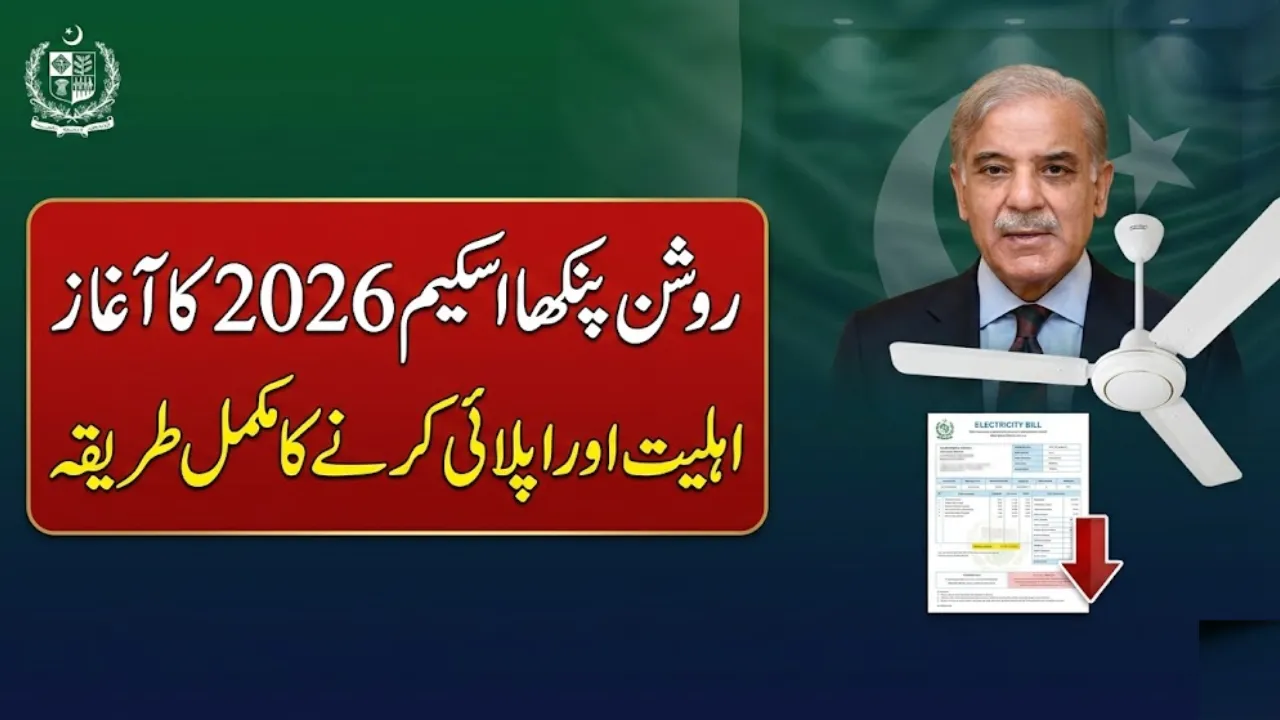
In a major relief step ahead of the summer season, Prime Minister Shehbaz Sharif has launched the Roshan Pankha Scheme 2026 under the broader “Roshan Pakistan” energy reform vision.
The initiative targets one of the most common yet costly household appliances in Pakistan — outdated ceiling fans that consume excessive electricity.
With power bills becoming a growing concern for middle- and low-income families, this program promises a practical solution: replace old fans with energy-efficient models and significantly reduce monthly expenses.
Why the Roshan Pankha Scheme Matters in 2026
Pakistan’s energy landscape has changed dramatically over the past two years. Rising fuel costs, climate pressures, and increased solar adoption have reshaped electricity demand patterns.
According to officials at the launch ceremony, nearly 10 million inefficient fans across the country will be replaced in phases. These older models consume far more units than modern inverter-based or brushless DC (BLDC) fans.
For a typical household running 3–5 fans during peak summer, switching to efficient units could result in savings of up to Rs. 12,000 per month, depending on usage and tariff category.
This is not just a consumer relief measure — it is also an energy management strategy to reduce load on the national grid.
Who Can Benefit from the Scheme?
The program is primarily structured to support:
-
Low-income and protected electricity consumers
-
Families struggling with high summer electricity bills
-
Households using old AC or capacitor-based ceiling fans
-
Small shopkeepers and micro-business operators
Officials have indicated that priority may be given to consumers registered under protected or lifeline tariff categories. Verification will likely be linked to electricity consumer records.
Instead of offering cash subsidies, the scheme focuses on direct appliance replacement, ensuring long-term savings rather than short-term relief.
How the Scheme Will Work
The government, through energy authorities and implementation partners, will facilitate fan replacement through an organized process.
Consumers will likely have two options:
-
Exchange old fan for subsidized energy-efficient fan

-
Sell the old unit through the official channel and purchase a new approved model
While final operational details are being rolled out, early briefings suggest that the program will include verification through electricity meter data and possibly CNIC-based registration.
Below is a simplified overview:
| Component | Details |
|---|---|
| Program Name | Roshan Pankha Scheme 2026 |
| Launch Authority | PM Shehbaz Sharif |
| Target Replacement | 10 Million Old Fans |
| Estimated Savings | Up to Rs. 12,000/month (usage-based) |
| Main Focus | Low-income & protected consumers |
Economic and Environmental Impact
Energy experts at the ceremony highlighted a critical issue: electricity demand has shifted due to increased solarization, with national demand dropping close to 8,000 MW at certain intervals.
Replacing inefficient fans will:
-
Reduce unnecessary electricity consumption
-
Decrease pressure on power plants
-
Minimize the need for new generation projects

-
Lower carbon emissions
Climate officials have also connected this move to Pakistan’s broader clean energy targets. The country aims to increase its renewable share significantly by the early 2030s.
By targeting one of the most widely used appliances, the government is adopting a demand-side energy reform model — a strategy rarely executed at this scale before.
Relief for Families Before Peak Summer
For many Pakistani households, summer bills are financially overwhelming. In extreme heat, fans operate 10–18 hours daily.
Old fans can consume 120–150 watts per hour, while modern BLDC fans use as little as 30–35 watts.
This difference may look small per hour, but across multiple fans and extended daily usage, the savings become substantial.
For a household earning Rs. 40,000–60,000 per month, reducing electricity expenses can directly improve food security, education spending, and healthcare affordability.
What You Should Prepare Before Applying
Although full registration guidelines are being finalized, citizens are advised to keep the following ready:

-
Valid CNIC
-
Latest electricity bill copy
-
Proof of meter ownership or tenancy
-
Old fan model details (if required for exchange)
Applicants should rely only on official government announcements and verified portals once the registration process opens.
Avoid third-party agents or unofficial payment demands.
How This Program Differs from Previous Subsidy Schemes
Unlike temporary bill relief packages or tariff adjustments, the Roshan Pankha Scheme focuses on permanent energy efficiency improvement.
Instead of lowering prices for a few months, it reduces electricity consumption itself.
This structural shift makes it more sustainable than past subsidy-based approaches.
Frequently Asked Questions
When will Roshan Pankha Scheme registration start in 2026?
The government has announced the launch, and phased implementation is expected before peak summer. Official registration timelines will be shared through verified government channels.
How much money can a household realistically save?
Savings depend on the number of fans used and daily operating hours. Households using multiple fans throughout summer may save up to Rs. 12,000 monthly.
Is this scheme only for low-income families?
Priority will likely be given to protected and lifeline electricity consumers, but detailed eligibility guidelines are expected soon.
Will old fans be taken back by the government?
Yes, the exchange model suggests consumers can either replace or sell old fans through official channels under the scheme.
Conclusion
The Roshan Pankha Scheme 2026 signals a strategic shift in Pakistan’s energy policy — from short-term subsidies to long-term efficiency reform. By targeting a simple household appliance, the government is addressing both economic hardship and national energy sustainability.
If implemented transparently and efficiently, this initiative could become one of the most impactful consumer relief programs of the year — not because it promises temporary discounts, but because it reduces the root cause of rising electricity bills.
For millions of Pakistani families preparing for another intense summer, that shift could make all the difference.