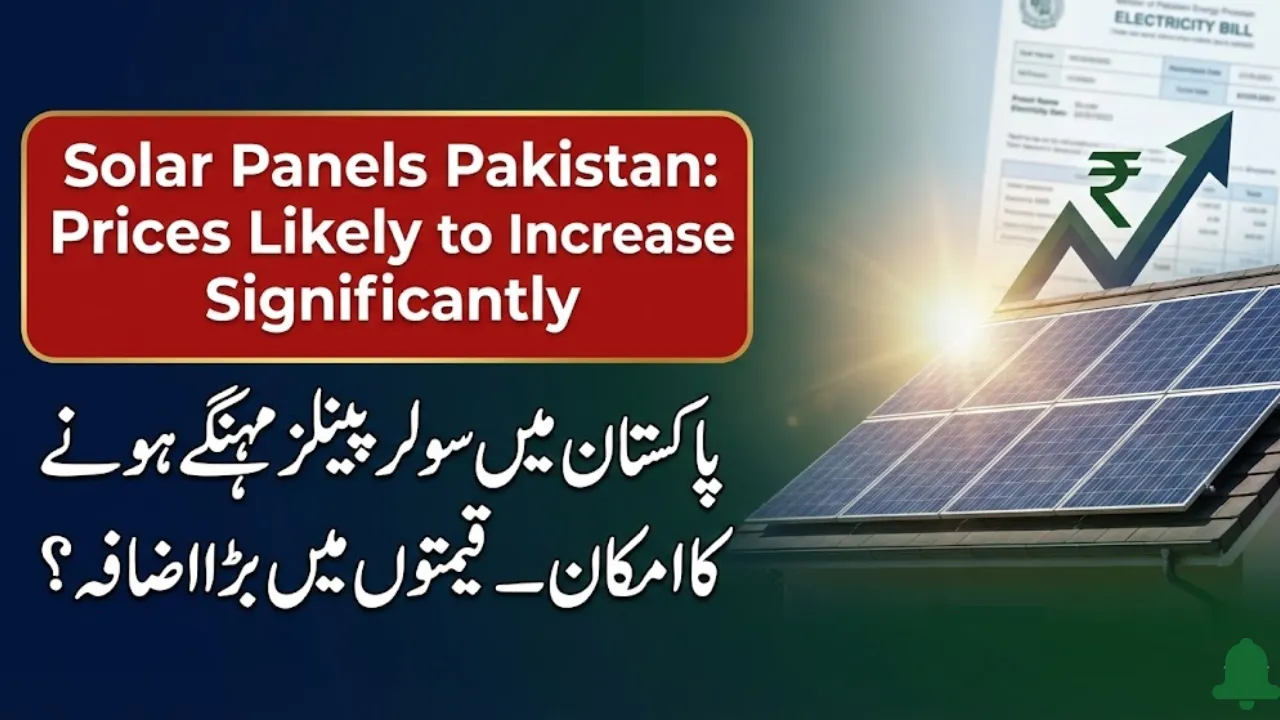
Pakistan’s solar boom is facing a new reality in 2026. After months of record-low rates, solar panel prices in Pakistan are now climbing fast, and industry experts warn that this surge may continue in the coming months.
For households already struggling with rising electricity bills, this shift could directly impact installation decisions. Here’s what is changing — and why it matters now.
A Sudden Price Turnaround in Early 2026
Throughout late 2025, solar panels were available at historic lows. Many middle-income families rushed to install rooftop systems.
But by February 2026, market data shows an average increase of Rs. 4,000 to Rs. 8,000 per panel, depending on capacity.
Here’s a simplified snapshot of current market trends:
| Panel Capacity | Late 2025 Price | February 2026 Price |
|---|---|---|
| 585-Watt | Rs. 16,000–17,000 | Rs. 20,000–21,000 |
| 645-Watt | Around Rs. 20,000 | Rs. 24,000–25,000 |
| 720-Watt | Rs. 22,000–25,000 | Rs. 30,000–35,000 |
Dealers in major cities including Lahore, Karachi and Islamabad confirm that wholesale rates are still moving upward week by week.
Why Are Solar Panel Prices Increasing?
The increase is not random. Several local and international factors are pushing costs higher at the same time.
1. China’s Export Policy Change
Most solar panels imported into Pakistan come from China.
From April 1, 2026, China is withdrawing its VAT export rebate on photovoltaic products. This means manufacturers will no longer receive tax relief on exported solar modules.

Experts estimate this alone could raise international module prices by nearly 8–10%, and Pakistani importers will ultimately pass this cost to consumers.
2. Rising Global Raw Material Costs
Solar cell production depends heavily on silver and copper.
Global commodity prices have increased in recent months due to supply chain pressures and geopolitical uncertainty. As manufacturing costs rise in China, export prices naturally follow.
3. New Tax Measures in Pakistan
The Federal Budget 2025–26 introduced a 10% to 18% sales tax on imported solar panels.
The move was designed to support local assembly and manufacturing. However, in the short term, it has increased retail prices for imported modules — which still dominate the market.
Local production capacity is growing, but it has not yet replaced the bulk of imports.
4. Shipping and Dollar Pressure
Freight costs have climbed again in early 2026. At the same time, fluctuations in the Pakistani rupee against the US dollar are adding additional import costs.
Per-watt pricing has jumped from around Rs. 22 per watt last year to nearly Rs. 33–40 per watt in some cases.

NEPRA’s New Net Metering Rules Change the Equation
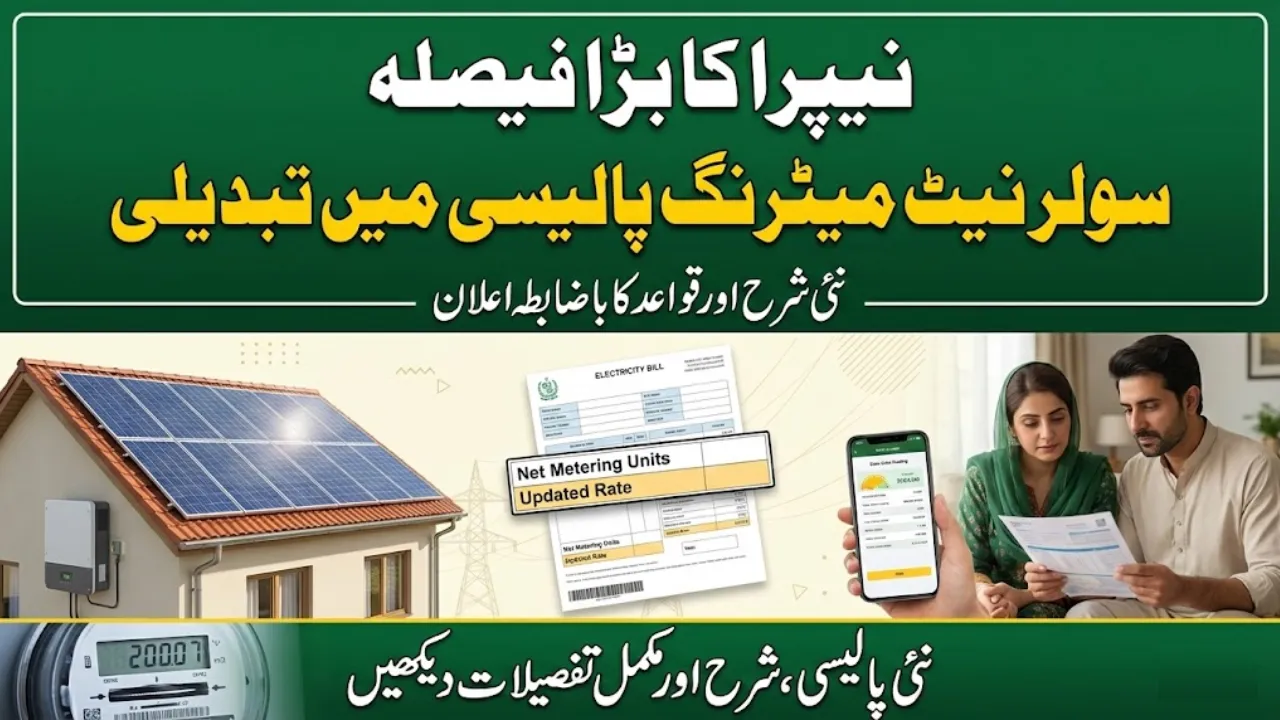
Another major development is the Prosumer Regulations 2026 introduced by National Electric Power Regulatory Authority (NEPRA).
Under previous rules, solar users could exchange units with the grid on a unit-for-unit basis.
Now, the system has shifted to net billing:
-
Consumers sell excess electricity at around Rs. 11–13 per unit
-
They purchase grid electricity at Rs. 65–70 per unit
This pricing difference has reduced the financial return for grid-tied systems.
As a result, many households are now investing in hybrid systems with batteries, which has also triggered a noticeable increase in battery prices.
How This Affects Homeowners in 2026
For families considering solar installation this year, the financial calculations are different compared to 2025.

Key impacts:
-
Higher upfront installation cost
-
Longer payback period due to new net billing rules
-
Increased demand for hybrid systems
-
Rising battery costs (10% spike reported in early 2026)
However, electricity tariffs remain high, and long-term savings are still possible — especially for homes with heavy daytime consumption.
Is This the End of Affordable Solar in Pakistan?
Not necessarily.
While prices are increasing, Pakistan’s shift toward renewable energy continues. The government is encouraging local manufacturing, which may stabilize prices in the medium term.

In addition, rising grid tariffs are keeping solar financially relevant despite higher panel costs.
Experts suggest that the biggest price jump may occur before China’s VAT withdrawal fully impacts shipments arriving in Pakistan during mid-2026.
For many buyers, waiting too long could mean paying significantly more.
Should You Install Solar Now or Wait?
This depends on individual circumstances.
If your electricity bills exceed Rs. 40,000–50,000 per month, solar may still offer meaningful long-term relief.
However, buyers should:
-
Compare hybrid vs on-grid systems carefully
-
Calculate revised payback periods under net billing
-
Verify warranty and panel quality
-
Avoid panic buying

The market is adjusting, and prices may fluctuate further before stabilizing.
Frequently Asked Questions
Are solar panel prices still increasing in 2026?
Yes, prices have already increased significantly since late 2025, and further upward movement is expected due to global and local policy changes.
Why did net metering change in Pakistan?
NEPRA introduced new prosumer regulations to revise how surplus electricity is billed, shifting from unit exchange to net billing.
Will locally manufactured solar panels be cheaper?
In the long term, local production may reduce reliance on imports, but current supply levels are still limited.
Is solar still worth installing after price hikes?
For high-consumption households, solar can still provide savings over time, though the payback period may now be longer.
Will battery prices also increase?
Yes, demand for hybrid systems has pushed battery prices up by around 10% in early 2026.
Conclusion:
Solar energy in Pakistan is entering a new phase. The era of ultra-cheap panels appears to be ending, at least for now. Yet with rising electricity tariffs and ongoing power challenges, rooftop solar remains a powerful option for energy independence. The coming months will be critical as global policy changes and local regulations reshape the market once again.
Latest Updates