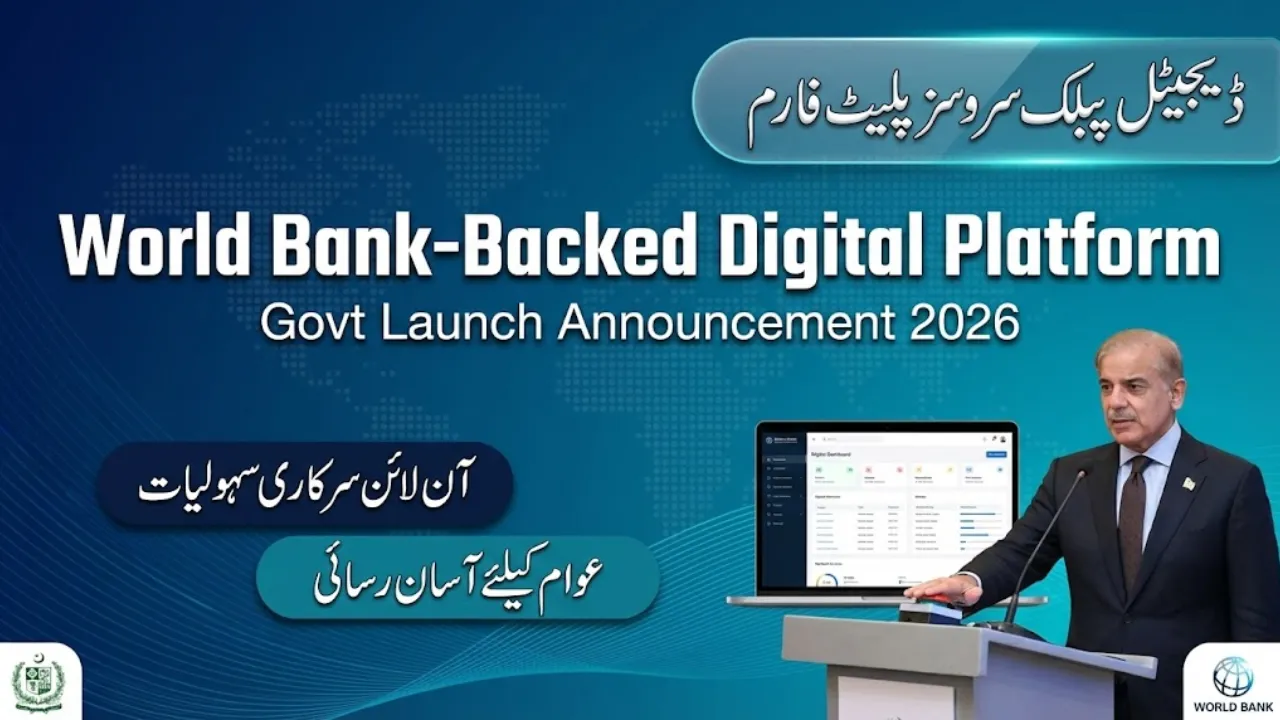
Pakistan is preparing to take a major leap in digital governance as the federal government moves forward with a World Bank–supported national digital public services platform aimed at unifying government systems across the country.
Officials describe the initiative as one of the most ambitious digital transformation projects in recent years — designed to simplify how citizens interact with the state, reduce bureaucratic delays, and strengthen transparency.
The project is being spearheaded by the Ministry of Information Technology and Telecommunication and is expected to reshape the future of public service delivery in Pakistan.
A Centralized Digital Backbone for the State
For decades, Pakistan’s government services have operated through fragmented systems. Federal and provincial departments often run separate platforms, databases, and processes — making it difficult for citizens to navigate services smoothly.
The new platform aims to create a centralized, interoperable digital ecosystem where departments can securely connect and exchange verified data.
Instead of visiting multiple offices or submitting the same documents repeatedly, citizens may eventually access a wide range of services through a single, integrated digital gateway.
This shift aligns with Pakistan’s broader Digital Pakistan vision, which emphasizes modern governance, efficiency, and citizen empowerment.
What the Project Actually Includes
According to official procurement documents, the initiative covers:
-
Design and development of a unified digital architecture
-
Integration of federal and provincial systems
-
Implementation of secure data exchange frameworks
-
Long-term operational support and maintenance

The bidding process is being conducted under international competitive standards, in line with World Bank procurement rules — a move that signals transparency and global oversight.
Both local and international technology firms have been invited to submit proposals, with a formal evaluation process planned after the submission deadline in March 2026.
A virtual pre-proposal conference has also been scheduled to clarify technical and operational requirements for interested bidders.
Why This Matters for Ordinary Citizens
While policy announcements often sound technical, the impact of this platform could be very practical.
If implemented effectively, Pakistanis may experience:
-
Faster processing of licenses and registrations
-
Reduced paperwork and physical visits
-
Improved tracking of applications
-
Better coordination between departments
-
Greater accountability in service delivery

For overseas Pakistanis, digital integration could also mean easier access to government services without relying on intermediaries.
In a country where long queues and procedural delays remain common, this reform could significantly reduce friction between citizens and the state.
Transparency and World Bank Oversight
One of the most important aspects of the project is World Bank financing and supervision.
Projects backed by the World Bank typically require strict compliance with international procurement standards, anti-corruption safeguards, and performance benchmarks.
This oversight is intended to ensure:
-
Transparent vendor selection
-
Competitive pricing
-
Technical quality assurance
-
Institutional accountability

At a time when digital governance is becoming central to economic competitiveness, global development partners are increasingly supporting countries in building secure and scalable digital infrastructure.
How This Fits Into Pakistan’s Digital Governance Roadmap
The government has already introduced multiple digital initiatives over the past few years, including online tax systems, digital identity verification, and e-procurement platforms.
However, these efforts often operated independently.
The new platform appears to focus on integration rather than isolated digitization — a more advanced stage of digital transformation.
Instead of simply moving forms online, the aim is to build a connected digital state architecture, where systems communicate seamlessly while maintaining data protection standards.
If executed properly, this could:
-
Improve policy coordination
-
Strengthen data-driven decision-making
-
Reduce duplication across departments
-
Enhance citizen trust in public institutions

Key Project Snapshot
| Component | Details |
|---|---|
| Funding Partner | World Bank |
| Lead Ministry | Ministry of IT & Telecommunication |
| Scope | Unified national digital public services platform |
| Bidding Model | International competitive procurement |
| Current Status | Proposal submissions invited (Deadline: March 2026) |
Challenges Ahead
While the vision is promising, implementation will be critical.
Digital transformation projects in developing countries often face hurdles such as:
-
Institutional resistance
-
Data privacy concerns
-
Cybersecurity risks
-
Technical capacity gaps
-
Inter-provincial coordination challenges
Pakistan will need robust governance structures, skilled technical teams, and strong inter-agency collaboration to ensure long-term success.
Citizens will also expect clear communication about how their personal data will be protected under the new system.
A Turning Point for Public Service Delivery?
If successful, this platform could become the foundation of Pakistan’s next-generation public administration.

Rather than standing in line at multiple offices, citizens may interact with government services through secure digital interfaces.
For businesses, streamlined approvals and documentation processes could reduce operational friction.
For policymakers, integrated data systems may support smarter governance decisions.
The coming months — particularly the vendor selection and system design phase — will determine how transformative this initiative truly becomes.
FAQs
What is the purpose of the new digital public services platform?
The platform aims to integrate federal and provincial government systems into a unified digital infrastructure to improve service delivery, transparency, and efficiency.
Who is funding the project?
The initiative is financially supported by the World Bank and implemented by Pakistan’s Ministry of Information Technology and Telecommunication.
When will the platform be launched?
Currently, proposals are being invited, with submissions due in March 2026. A final launch timeline will depend on vendor selection and development phases.
Will citizens need new digital IDs to access services?
No official announcement has indicated new IDs at this stage. The system is expected to integrate with existing digital identity frameworks.
How will data security be ensured?
Because the project follows World Bank procurement and governance standards, cybersecurity and data protection frameworks are expected to be built into the platform’s architecture.
Conclusion
Pakistan’s move toward a World Bank-backed unified digital public services platform represents more than a technology upgrade — it signals a structural shift in how the state engages with its citizens. If transparency, cybersecurity, and inter-departmental coordination are handled effectively, this initiative could mark a defining chapter in Pakistan’s digital governance journey. The real test now lies not in policy announcements, but in execution that delivers measurable change for ordinary Pakistanis.
Latest Updates